Artificial Intelligence Breakthroughs in 2024: Major AI Innovations, Advanced Models.
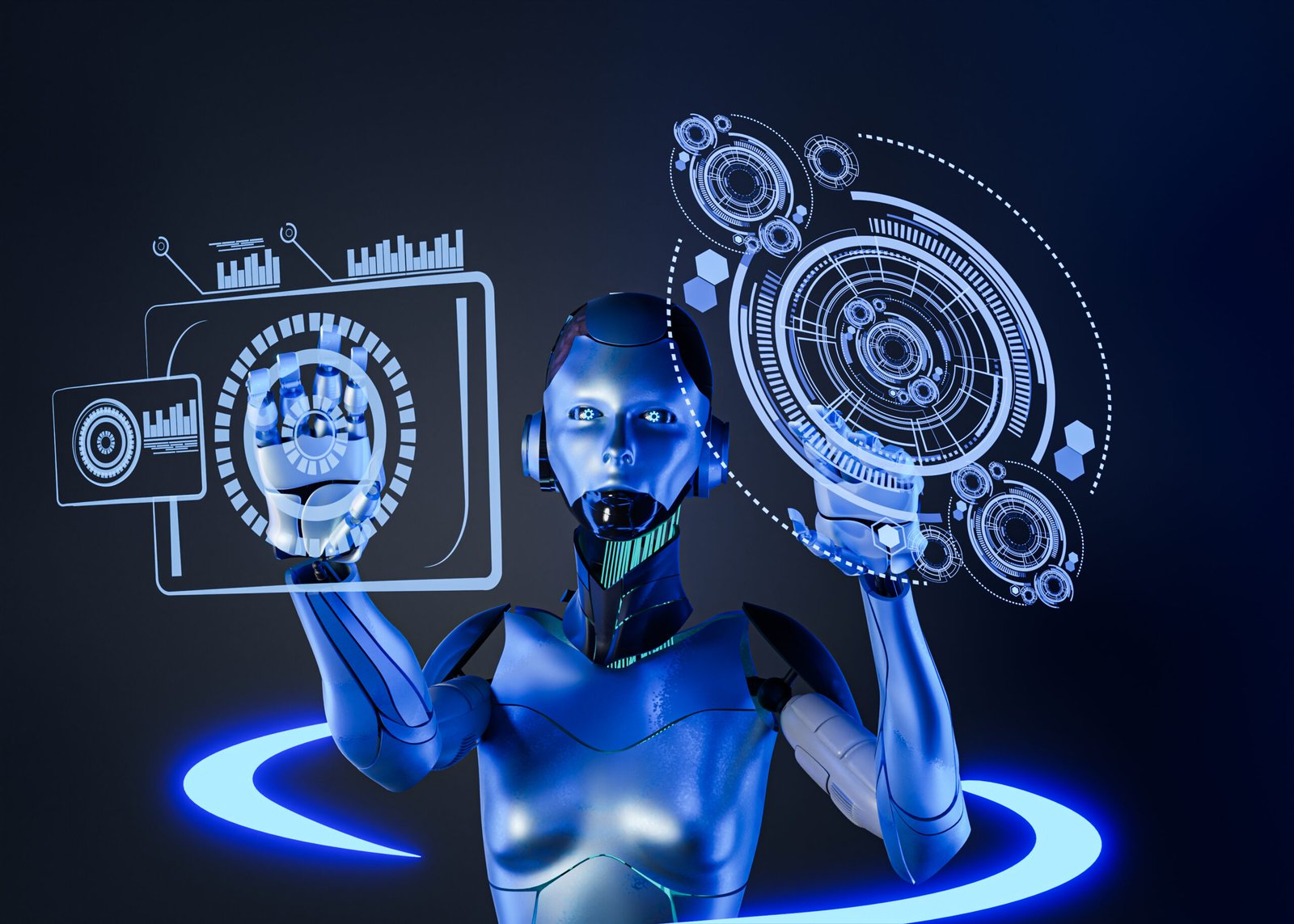
Artificial intelligence (AI) experienced remarkable growth in 2024, becoming one of the most influential areas of modern technology. From advanced chatbots and image generators to scientific research, healthcare applications, and intelligent robotics, AI systems made significant progress throughout the year.
Companies and research organisations introduced powerful models capable of understanding different types of information, solving more complex problems, generating realistic content, and assisting people with everyday tasks. AI also became more accessible through open-source models, developer platforms, and applications integrated into familiar software.
The artificial intelligence breakthroughs 2024 topic highlights how quickly this technology evolved and how its applications expanded beyond traditional automation. Instead of working only with written instructions, newer AI systems increasingly handled images, audio, video, code, and other forms of information.
Some of the most important developments included OpenAI’s GPT-4o and o1, Google’s Gemini 1.5, Anthropic’s Claude 3 family, Meta’s Llama 3.1, text-to-video generation, AlphaFold 3, and AI-powered mathematical reasoning.
These innovations also raised important questions about accuracy, privacy, employment, copyright, and responsible technology development.
This article explores the biggest AI breakthroughs of 2024, their practical applications, leading technologies, challenges, and the possibilities they created for the future.
What Made 2024 an Important Year for Artificial Intelligence?
Artificial intelligence had already become popular before 2024, particularly following the rapid adoption of generative AI tools. However, the technology advanced considerably during the year.
Earlier AI applications often focused on specific tasks, such as recognising images, recommending products, translating languages, or answering basic questions.
In 2024, researchers and technology companies increasingly focused on building systems that could combine several capabilities.
Major developments included:
- More powerful language models.
- Advanced reasoning capabilities.
- Multimodal AI systems.
- Realistic AI-generated videos.
- Improved AI coding assistants.
- Open-source foundation models.
- AI-supported scientific discoveries.
- More advanced robotics research.
- AI applications in healthcare and weather forecasting.
- Increased attention to AI safety and regulation.
These changes made AI more useful across professional, educational, creative, and scientific environments.
Top Artificial Intelligence Breakthroughs of 2024
Several innovations attracted significant attention during 2024. Some improved existing AI capabilities, while others introduced entirely new ways to use machine intelligence.
| AI breakthrough | Organisation or research team | Major development |
|---|---|---|
| GPT-4o | OpenAI | Real-time multimodal interaction |
| o1 reasoning models | OpenAI | Advanced problem-solving approaches |
| Gemini 1.5 | Google DeepMind | Long-context multimodal processing |
| Claude 3 | Anthropic | Improved language and multimodal capabilities |
| Llama 3.1 | Meta | Powerful open-weight language models |
| Sora | OpenAI | Text-to-video generation |
| AlphaFold 3 | Google DeepMind and Isomorphic Labs | Prediction of molecular structures and interactions |
| AlphaGeometry 2 and AlphaProof | Google DeepMind | Advanced mathematical reasoning |
| GenCast | Google DeepMind | AI-powered weather forecasting |
| AlphaProteo | Google DeepMind | AI-designed protein binders |
1. OpenAI Introduced GPT-4o
One of the most significant AI developments in 2024 was the introduction of GPT-4o by OpenAI in May.
The letter “o” stands for “omni,” highlighting its ability to work across different types of information.
GPT-4o was designed to process text, images, and audio within a unified model. It also supported more natural voice interactions, making conversations with AI feel more responsive.
Important capabilities included:
- Understanding written instructions.
- Analysing uploaded images.
- Responding to spoken language.
- Producing text and audio outputs.
- Supporting multilingual communication.
- Helping with coding and problem-solving.
One important improvement was its ability to handle audio interactions with lower latency than earlier voice experiences.
This development helped move conversational AI beyond traditional typing-based interactions.
2. OpenAI Introduced the o1 Reasoning Models
Another major breakthrough came in September 2024, when OpenAI introduced its o1 reasoning model preview.
Unlike conventional language models that primarily focus on generating responses from learned patterns, o1 was designed to spend additional computation working through complex problems before producing an answer.
Its development focused on areas such as:
- Mathematics.
- Programming.
- Scientific problem-solving.
- Logical reasoning.
- Complex multi-step questions.
OpenAI later introduced o1 in December 2024.
These models represented an important change in AI development because researchers were exploring ways to improve problem-solving through additional reasoning at inference time.
However, reasoning models were not perfect. They could still make mistakes, produce incorrect explanations, and struggle with certain tasks.
3. Google Gemini 1.5 Improved Long-Context AI

Google DeepMind introduced Gemini 1.5 in February 2024.
One of its important capabilities was long-context processing. Certain versions supported context windows of up to one million tokens, allowing the model to process much larger amounts of information than many earlier systems.
This capability created new possibilities for working with:
- Long documents.
- Large collections of text.
- Source code.
- Audio recordings.
- Video content.
- Research materials.
For example, a researcher could use a long-context model to examine extensive documentation or locate information across a large collection of files.
Gemini 1.5 Pro and Gemini 1.5 Flash also demonstrated different approaches to balancing model capability, speed, and efficiency.
Long-context AI became an important area of competition among technology companies during 2024.
4. Anthropic Released the Claude 3 Family
Anthropic introduced its Claude 3 family in March 2024.
The initial models included:
- Claude 3 Haiku.
- Claude 3 Sonnet.
- Claude 3 Opus.
These models were developed with different performance and speed priorities.
Claude 3 improved several areas of AI interaction, including language understanding, reasoning, coding assistance, and image analysis.
The introduction of the model family also demonstrated the growing competition among major AI developers.
Rather than offering one model for every task, companies increasingly created multiple versions designed for different workloads and budgets.
5. Meta Released Llama 3.1
Meta introduced Llama 3.1 in July 2024, expanding the availability of powerful open-weight language models.
The release included models with 8-billion, 70-billion, and 405-billion parameters.
Llama 3.1 attracted attention because developers and organisations could download supported model weights and adapt them for different applications under the applicable licence.
Potential uses included:
- Building AI assistants.
- Creating specialised chatbots.
- Developing coding tools.
- Research and experimentation.
- Running models in customised environments.
- Supporting business automation.
Open-weight AI models were important because they gave developers more flexibility than relying exclusively on hosted commercial services.
However, open-weight does not mean unrestricted use. Developers still need to follow the relevant licence terms and consider safety, privacy, and security.
Breakthroughs in AI Image and Video Generation
Generative AI became increasingly powerful in 2024.
Earlier tools were already capable of creating images from written descriptions. During 2024, researchers and companies made substantial progress in generating realistic video content.
1. OpenAI Sora
OpenAI introduced Sora in February 2024 as a text-to-video research preview.
The model demonstrated the ability to generate video clips from written prompts and other visual inputs.
Its development attracted attention because creating realistic video is more complicated than producing a single image.
A video-generation system must maintain relationships between objects, actions, camera movement, and different frames.
Sora demonstrated capabilities involving:
- Text-to-video generation.
- Visual scene creation.
- Camera movement.
- Complex environments.
- Video editing and variations.
- Image-to-video workflows.
OpenAI later released Sora to eligible users in December 2024 through its Sora product.
Although the technology was impressive, generated videos could still contain visual inconsistencies, inaccurate movements, and unrealistic details.
2. Google’s Veo
Google DeepMind introduced Veo in May 2024.
Veo was designed to generate high-quality videos from text and visual prompts.
It focused on improving cinematic video generation, realistic movement, and visual consistency.
Google later announced Veo 2 in December 2024, highlighting improvements in video quality, realism, and camera control.
These developments showed how quickly generative AI was expanding from static images into moving visual content.
3. Improvements in AI Image Generation
Image-generation technology also advanced during 2024.
Several platforms introduced improvements in image quality, prompt understanding, editing, and visual composition.
Notable developments included Google’s Imagen 3 and improvements across other commercial and open image-generation systems.
These tools could support:
- Marketing graphics.
- Concept art.
- Product illustrations.
- Social media content.
- Creative experimentation.
- Visual storytelling.
AI image generation also raised copyright and authenticity concerns, especially when generated content resembled existing artwork or real people.
AI Breakthroughs in Science and Healthcare
One of the most important areas of AI research in 2024 was scientific discovery.
Researchers increasingly used machine learning to analyse biological structures, explore mathematical problems, improve medical research, and understand complex natural systems.
1. AlphaFold 3 Advanced Molecular Research
Google DeepMind and Isomorphic Labs introduced AlphaFold 3 in May 2024.
AlphaFold 3 represented a major development in predicting the structures and interactions of biological molecules.
It expanded beyond earlier protein-structure prediction capabilities to model interactions involving:
- Proteins.
- DNA.
- RNA.
- Small molecules.
- Ligands.
- Other biological components.
Understanding molecular structures is important because biological functions depend partly on how molecules interact.
AlphaFold 3 could help researchers investigate biological systems and identify potential directions for drug discovery.
However, AI-generated predictions do not replace experimental validation. Scientists still need laboratory research and additional evidence to confirm important findings.
2. AlphaProteo Designed Protein Binders
Google DeepMind announced AlphaProteo in September 2024.
This AI system was developed to design novel protein binders that could attach to target proteins.
Protein binders have potential applications in:
- Biomedical research.
- Drug development.
- Biosensor design.
- Studying biological processes.
- Understanding disease-related proteins.
The development demonstrated how generative AI could move beyond producing digital content and contribute to the design of biological molecules.
3. AI Supported Medical Research
AI research in 2024 also expanded into healthcare applications.
Google introduced Med-Gemini research models designed to combine medical knowledge with multimodal and long-context capabilities.
The research explored possible applications involving medical questions, clinical information, and medical images.
Other research efforts focused on improving the development of tools for medical imaging and disease-related analysis.
Potential applications included:
- Medical image interpretation.
- Research assistance.
- Health information analysis.
- Clinical documentation.
- Medical education.
- Early disease detection research.
AI should not be treated as a replacement for qualified medical professionals. Clinical decisions require appropriate evidence, professional judgement, and patient-specific assessment.
AI Made Progress in Mathematics and Reasoning

Mathematical reasoning has traditionally been a difficult challenge for AI systems.
Many language models could solve basic calculations but struggled with complex proofs and unfamiliar mathematical problems.
In 2024, researchers demonstrated important improvements in this area.
1. AlphaGeometry 2
Google DeepMind developed AlphaGeometry 2 as an improved mathematical reasoning system.
It was designed to solve complex geometry problems using a combination of language-model techniques and symbolic reasoning.
The system demonstrated strong performance on mathematical geometry problems and helped advance research into AI-assisted proof construction.
2. AlphaProof
AlphaProof was another important Google DeepMind research system introduced in 2024.
It used reinforcement learning and formal mathematical reasoning to develop and verify mathematical proofs.
In July 2024, AlphaProof and AlphaGeometry 2 were combined in an approach that achieved a performance equivalent to a silver medal at the International Mathematical Olympiad.
The systems solved four of the six problems from that year’s competition, according to Google DeepMind’s report.
This was a notable achievement because mathematical competitions require more than memorising formulas. They demand logical thinking, proof construction, and the ability to work through unfamiliar problems.
The result showed that AI was making progress toward more advanced mathematical problem-solving.
AI Breakthroughs in Weather Forecasting and Climate Research
Weather forecasting is another field where artificial intelligence demonstrated significant potential in 2024.
Traditional weather prediction often relies on complex numerical simulations that require substantial computing resources.
AI models can learn patterns from historical weather data and produce forecasts using different computational approaches.
1. Google’s GenCast
Google DeepMind introduced GenCast in December 2024.
GenCast was an AI-based ensemble weather forecasting model designed to generate multiple possible future weather scenarios.
It was developed to improve medium-range forecasting and provide information about uncertainty.
Potential applications included:
- Monitoring severe weather.
- Supporting emergency planning.
- Improving agricultural decisions.
- Assessing potential storms.
- Supporting energy planning.
Google DeepMind reported that GenCast outperformed the European Centre for Medium-Range Weather Forecasts’ ENS system on 97.2% of the 1,320 verification targets it evaluated.
This result was based on the study’s selected benchmarks and should not be interpreted as proof that AI forecasts are always more accurate in every situation.
2. AI-Based Flood Forecasting
AI also supported flood prediction and disaster preparedness.
Research teams developed systems capable of analysing weather information, river conditions, and other environmental data to estimate flood risks.
Such tools can help authorities identify potentially dangerous situations and communicate warnings.
AI forecasting still depends on the quality of available information and should complement, rather than replace, established disaster-management systems.
AI and Robotics Became More Connected
Another important development during 2024 involved combining AI models with physical robots.
Traditional robots often depended on carefully programmed instructions and controlled environments.
Newer research explored systems that could understand instructions, recognise objects, and perform more flexible actions.
1. AutoRT
Google DeepMind introduced AutoRT research in January 2024.
The system explored how foundation models could help coordinate robots and support task planning in real-world environments.
It used language and visual understanding to help robots interpret their surroundings and perform different tasks.
2. ALOHA Unleashed
Google DeepMind also published research involving ALOHA Unleashed.
The system demonstrated improvements in teaching robots to perform coordinated two-arm tasks.
Examples included:
- Tying shoelaces.
- Hanging clothes.
- Handling tools.
- Manipulating objects.
- Performing selected household activities.
These developments showed how AI could help robots learn more flexible physical behaviours.
3. The Future of AI-Powered Robotics
AI-powered robotics may eventually support applications in:
- Manufacturing.
- Warehousing.
- Agriculture.
- Healthcare assistance.
- Household tasks.
- Scientific laboratories.
However, robots still face challenges involving safety, cost, physical reliability, and understanding unpredictable environments.
Open-Source AI Became More Important in 2024
Open-source and open-weight AI development became a major part of the technology landscape.
Developers increasingly gained access to models that could be downloaded, adapted, and deployed in different environments.
This created opportunities for universities, startups, independent developers, and businesses.
Benefits of Open AI Models
Open-weight models can offer several advantages:
- Greater development flexibility.
- Customisation for specialised tasks.
- More control over deployment.
- Opportunities for research.
- Reduced dependence on a single provider.
- Potential cost savings in suitable environments.
However, running large models can require powerful hardware and technical expertise.
Organisations also need to consider licensing, data protection, model security, and the possibility of harmful outputs.
AI Safety, Ethics, and Regulation in 2024
As AI became more powerful, concerns about its responsible use became increasingly important.
The year saw greater attention to misinformation, deepfakes, privacy, bias, copyright, and automated decision-making.
1. Deepfake and Misinformation Concerns
AI-generated images, voices, and videos became easier to create.
Although these technologies have legitimate creative applications, they can also be misused to produce misleading content.
Potential risks include:
- Fake celebrity endorsements.
- Impersonation.
- Fraudulent voice recordings.
- Manipulated political content.
- Non-consensual synthetic images.
- Misleading news material.
Users should verify important information and avoid sharing suspicious AI-generated content as fact.
2. The European Union AI Act
The European Union’s AI Act entered into force on 1 August 2024.
It introduced a risk-based regulatory framework for artificial intelligence.
The framework distinguishes between different levels of risk and establishes obligations for certain AI systems and organisations.
Its goals include supporting responsible AI development, protecting fundamental rights, and creating clearer requirements for high-risk applications.
The law’s requirements apply in stages, with different provisions becoming applicable at different times.
3. Responsible AI Development
Technology companies also increased their focus on AI safety research.
Areas of attention included:
- Testing model behaviour.
- Reducing harmful outputs.
- Improving factual accuracy.
- Detecting misuse.
- Protecting personal information.
- Developing content identification tools.
- Improving transparency.
Responsible AI requires cooperation between technology companies, governments, researchers, businesses, and users.
How Artificial Intelligence Breakthroughs Changed Different Industries
The developments of 2024 created opportunities across several industries.
| Industry | Important AI applications | Potential impact |
|---|---|---|
| Healthcare | Medical research and image analysis | Research and clinical support |
| Education | AI tutors and learning assistants | Personalised learning |
| Business | Automation and data analysis | Improved productivity |
| Entertainment | Image, audio, and video generation | New creative workflows |
| Agriculture | Weather and crop analysis | Better planning |
| Manufacturing | Intelligent robotics | Process automation |
| Software development | AI coding assistants | Faster development workflows |
| Transportation | Computer vision and planning | Driver-assistance research |
Healthcare
AI can help researchers analyse medical information and investigate new diagnostic approaches.
Its use requires careful testing and clinical oversight.
Education
AI assistants can explain difficult topics, generate practice questions, and help students organise learning materials.
Teachers remain important for guidance, assessment, and understanding individual student needs.
Business
Companies can use AI to summarise documents, analyse information, support customer service, and automate selected workflows.
Businesses should review outputs before using them for important decisions.
Entertainment
AI tools can help creators produce illustrations, music-related assets, video concepts, and marketing materials.
These tools also create new discussions about intellectual property and the role of human creativity.
Software Development
AI coding assistants can suggest code, explain errors, generate tests, and help developers understand unfamiliar programming languages.
Developers must still review generated code for security, accuracy, and reliability.
Major Challenges Facing Artificial Intelligence
Despite the progress made in 2024, AI technology continued to face several important limitations.
1. AI Hallucinations
AI models can produce statements that sound convincing but are incorrect.
This is particularly concerning in healthcare, finance, law, and other areas where accuracy is essential.
2. Data Privacy
AI systems may process personal, business, or confidential information.
Organisations need clear policies for collecting, storing, and using sensitive data.
3. High Computing Costs
Training and operating advanced AI models can require powerful processors, specialised hardware, and substantial energy resources.
These costs can limit access for smaller organisations.
4. Copyright and Ownership
Generative AI models are trained using large collections of information, raising questions about copyrighted material, ownership, and permission.
Legal frameworks and industry practices continue to evolve.
5. Employment and Skills
AI may automate certain repetitive tasks while changing the skills required for other jobs.
Workers may need to develop new capabilities involving digital tools, critical thinking, data analysis, and AI supervision.
6. Bias and Fairness
AI systems can reproduce biases present in their training data.
Testing, transparency, and human oversight are important for reducing unfair outcomes.
What Can We Expect From Artificial Intelligence After 2024?

The breakthroughs of 2024 created a foundation for further developments in the following years.
Several research directions became particularly important.
More Advanced Reasoning Models
AI developers are continuing to explore methods that improve logical reasoning, mathematics, coding, and complex problem-solving.
Better AI Agents
AI agents aim to perform multi-step tasks using tools, software, and external information.
Future systems may assist with research, scheduling, document management, and selected business workflows.
More Realistic Video Generation
Video-generation models are likely to become more capable of producing detailed scenes, realistic movements, and consistent visual content.
Scientific Discovery
AI may help researchers investigate new materials, proteins, medicines, and scientific problems.
Experimental testing will remain essential.
Improved Human-Robot Interaction
Advances in multimodal models may help robots understand instructions and interact more naturally with people and physical environments.
Responsible AI Regulation
Governments and organisations are likely to continue developing policies around transparency, privacy, security, accountability, and the responsible use of AI.
Frequently Asked Questions
1. What were the biggest artificial intelligence breakthroughs in 2024?
Some of the biggest developments included OpenAI’s GPT-4o and o1, Google’s Gemini 1.5, Anthropic’s Claude 3, Meta’s Llama 3.1, OpenAI’s Sora, AlphaFold 3, and AI-powered mathematical reasoning systems such as AlphaProof and AlphaGeometry 2.
2. Which AI model was introduced by OpenAI in 2024?
OpenAI introduced several important AI products and models in 2024, including GPT-4o in May, the o1 reasoning model preview in September, and Sora, which was first previewed in February and released as a product in December.
3. How did AI improve healthcare in 2024?
AI research advanced medical image analysis, medical question answering, molecular prediction, and scientific research. Systems such as Med-Gemini and AlphaFold 3 demonstrated potential applications, although clinical use requires appropriate testing and professional oversight.
4. What was the importance of AI-generated video in 2024?
AI-generated video became more advanced through developments such as OpenAI Sora and Google’s Veo. These systems demonstrated how written prompts and other inputs could be used to create moving visual scenes, opening new possibilities for creative work and digital production.
5. Will artificial intelligence replace human jobs?
AI may automate some tasks and change the way people work, but it does not mean that all jobs will disappear. Many roles require human judgement, communication, creativity, accountability, and practical skills. Learning how to use AI responsibly can help workers adapt to changing job requirements.
2 comments