French Bread Flour: Types, Uses, Substitutions, and Baking Tips
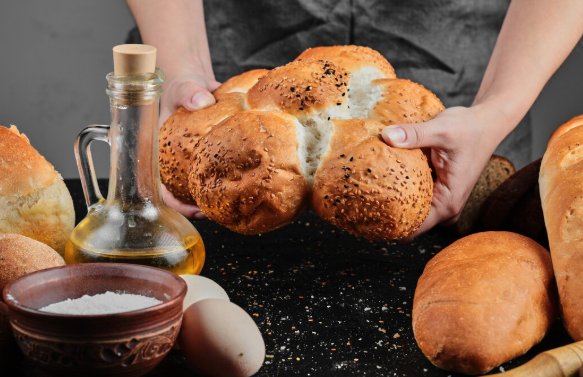
Choosing the right flour can make a major difference in the texture, flavor, and structure of homemade bread. French bread flour is commonly associated with the flours used to make traditional French breads such as baguettes, boules, and country loaves. Depending on the specific flour, it can provide a balanced combination of protein, mineral content, flavor, and dough-handling characteristics that help create bread with a crisp crust and an airy, flavorful interior.
Understanding the characteristics of French-style flour can help home bakers choose the right ingredient for their recipe. Flour type, protein level, hydration, fermentation time, and baking temperature all influence the finished loaf. You do not necessarily need imported flour to make excellent French-style bread, but knowing how different flours behave can make your results much more consistent.
What Is French Bread Flour?
French bread flour generally refers to flour suitable for making traditional French-style breads. In France, flour classifications are often identified by a “Type” number, such as T55 or T65.
The number relates primarily to the mineral or ash content remaining after milling. It does not simply mean that a higher number is always better.
Common French flour classifications include:
| Flour Type | General Characteristics | Common Uses |
|---|---|---|
| T45 | Very refined and light | Pastries and delicate baking |
| T55 | Refined white flour | Baguettes and everyday breads |
| T65 | Slightly higher mineral content | Artisan and country-style breads |
| T80 | More whole-grain character | Rustic breads |
| T110 | Semi-wholemeal | Hearty breads |
| T150 | Wholemeal | Dense, high-fiber breads |
Exact characteristics can vary between mills and products, so the type number should be considered alongside protein content and the manufacturer’s specifications.
What Makes French-Style Flour Different?
One important difference is that flour systems vary from country to country.
American and Canadian flours are often described primarily by their protein levels and intended baking use. French flour classifications place greater emphasis on mineral content.
This means you should not assume that a French flour type corresponds perfectly to a particular American flour.
For bread bakers, several characteristics matter:
- Protein content
- Gluten development
- Absorption
- Mineral content
- Milling method
- Flavor
- Dough strength
These factors influence how a dough behaves during mixing, fermentation, shaping, and baking.
T55 and T65 Flour
T55 and T65 are two types commonly associated with French-style bread baking.
T55
T55 is a relatively refined white flour and is widely associated with baguette-style baking.
It can produce dough with a light appearance and is suitable for many everyday French breads.
T65
T65 generally contains more mineral material than T55 and can provide a slightly deeper flavor and more rustic character.
It is often used for artisan-style breads where bakers want more complexity than they might get from highly refined flour.
Neither type is automatically superior. The best choice depends on the bread you are trying to make.
French Flour vs. Bread Flour

Standard bread flour and French-style flour can both produce excellent bread, but they are not identical.
Bread flour sold in many countries is usually designed to provide relatively strong gluten development. This can make it excellent for high-volume loaves and recipes that benefit from a strong dough structure.
French-style flour may produce a somewhat different dough depending on its protein content and milling characteristics.
The Main Difference
The key difference is not simply the country where the flour was produced. It is the specific composition and performance of the flour.
A strong bread flour may create a highly elastic dough, while a more traditionally milled French flour can produce a dough with a different balance of extensibility and strength.
That difference can affect the crumb and shape of the final loaf.
French Flour vs. All-Purpose Flour
All-purpose flour is another possible option for French-style bread.
Its protein content is often lower than that of dedicated bread flour, although exact levels vary by brand.
For baguettes and similar breads, all-purpose flour can work well, particularly for home bakers who prefer a slightly more tender structure.
However, if the recipe specifically calls for a stronger flour, all-purpose flour may produce a dough that spreads more easily.
The solution is not always to add more flour. Adjusting hydration and handling technique can be more effective.
Can You Substitute Other Flour?
Yes. You can usually substitute another wheat flour when a recipe calls for a French-style bread flour, but the result may change.
Bread Flour
Bread flour is often the easiest substitute for recipes requiring a strong dough.
It can provide good gluten development and structure.
All-Purpose Flour
All-purpose flour can work for many baguette and French bread recipes. The finished bread may have a somewhat different texture depending on the flour’s protein level.
Whole-Wheat Flour
Whole-wheat flour can add flavor and nutritional value, but replacing all the white flour with whole wheat may significantly change the dough.
It absorbs more water and can produce a denser loaf.
For beginners, replacing only part of the white flour with whole wheat is often easier to manage.
How Flour Affects Dough Hydration
Hydration refers to the amount of water compared with the amount of flour in a bread recipe.
For example, a recipe containing 500 grams of flour and 350 grams of water has approximately 70% hydration.
Different flours absorb different amounts of water.
This means that changing flour can require changes in the dough’s hydration.
If Your Dough Feels Too Dry
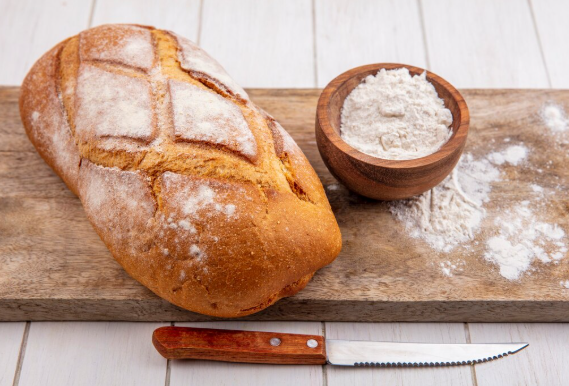
If the dough is stiff and difficult to mix, it may need more water.
However, add water gradually rather than pouring in a large amount at once.
If Your Dough Feels Too Wet
A high-hydration dough may initially feel sticky.
Instead of immediately adding large quantities of flour, give the dough time to rest and develop gluten. Folding can also improve its structure.
Experienced bakers often adjust hydration based on how the dough feels rather than following a number blindly.
How to Use It for Baguettes
Baguettes are one of the most recognizable French breads.
A basic baguette formula generally contains:
- Flour
- Water
- Yeast or starter
- Salt
The simplicity of the ingredient list means that flour quality and technique have a significant influence on the final loaf.
Mixing
Combine the flour and water, then add the remaining ingredients according to the recipe.
Avoid aggressively adding extra flour simply because the dough feels sticky at first.
Fermentation
Allowing the dough to ferment properly develops flavor and structure.
Longer fermentation can create more complex flavors, although timing depends on the recipe, yeast quantity, temperature, and desired result.
Shaping
Handle the dough gently during shaping.
Overworking can remove some of the gas developed during fermentation.
Scoring
Use a sharp blade to make controlled cuts across the surface.
Proper scoring gives expanding gases a planned escape route during baking.
Baking
A hot oven and strong initial heat help create the characteristic crust associated with baguettes.
Steam during the early part of baking can also help promote crust development and expansion.
Tips for Better French-Style Bread
Small changes in technique can have a noticeable effect.
Weigh Your Flour
Using a kitchen scale is more accurate than measuring flour by volume.
A cup of flour can vary considerably depending on how it is scooped and packed.
Use the Correct Water Amount
Do not automatically copy the hydration from another flour. Start with the recipe amount and adjust based on dough consistency.
Allow Enough Fermentation Time
Under-fermented dough may produce a dense loaf with limited flavor.
Over-fermented dough can become weak and difficult to shape.
Avoid Excessive Kneading
Some bread doughs benefit from intensive mixing, while others develop strength through resting and folding.
Follow the technique appropriate for your recipe.
Preheat the Oven Thoroughly
A properly heated oven provides better oven spring and crust development.
For artisan bread, a baking stone, steel, or Dutch oven can help retain heat.
Creating a Crisp French-Style Crust
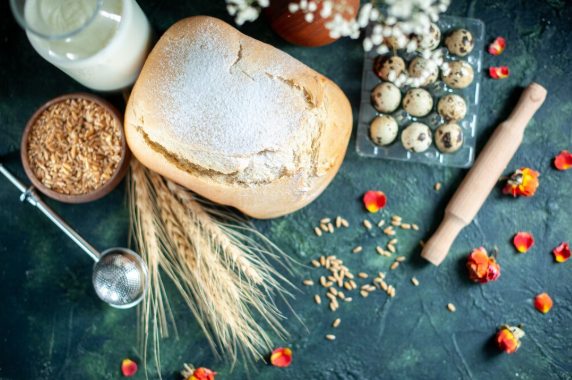
The crust is one of the defining characteristics of many French breads.
Several factors contribute to a crisp exterior.
High Heat
A well-preheated oven encourages rapid expansion during the beginning of baking.
Steam
Steam keeps the surface of the dough flexible during the early stage of baking. This allows the loaf to expand before the crust fully sets.
Proper Cooling
Do not immediately cut into a freshly baked loaf.
Allow it to cool on a rack so moisture can redistribute and the crumb can finish setting.
Cutting too early can result in a gummy interior.
Common Mistakes
Adding Too Much Flour
A sticky dough can tempt bakers to add more flour. This can create a dense loaf.
Use wet hands, a bench scraper, or gentle folding instead when appropriate.
Ignoring Flour Differences
Two flours with similar labels can behave differently.
Always pay attention to the actual product specifications.
Under-Proofing
Insufficient fermentation can result in poor volume and a dense crumb.
Over-Proofing
Excessive fermentation can weaken the dough and reduce oven spring.
Cutting the Bread Too Soon
Fresh bread needs time to cool. Cutting immediately can interfere with the final crumb structure.
How to Store French-Style Bread
Freshly baked bread is best enjoyed relatively soon after baking.
For short-term storage, keep the loaf at room temperature in a breathable bread bag or similar container.
Avoid refrigerating crusty bread unless necessary because refrigeration can accelerate staling.
For longer storage, freezing is generally a better option.
You can freeze a whole loaf or divide it into slices or portions before freezing.
Choosing Flour for Different Breads
Different breads benefit from different flour characteristics.
| Bread Style | Suitable Flour Approach |
|---|---|
| Baguette | Refined French-style flour or suitable bread flour |
| Country loaf | T65 or a blend with whole-grain flour |
| Rustic loaf | Higher-extraction flour or flour blend |
| Whole-wheat bread | Whole-wheat flour with suitable white flour |
| Sandwich bread | Strong bread flour or all-purpose flour |
| Sourdough | Flour selected according to hydration and fermentation needs |
The important point is to select flour according to the desired result rather than the label alone.
Key Points to Remember
- French flour classifications are different from many American flour classifications.
- T55 and T65 are commonly associated with French-style bread baking.
- Protein level is important when evaluating flour for bread.
- Flour type affects hydration, dough strength, and crumb texture.
- Bread flour can often substitute for French-style flour.
- All-purpose flour can work for many French bread recipes.
- Weighing flour produces more consistent results.
- Dough texture is often more useful than blindly following hydration numbers.
- Proper fermentation is essential for flavor and structure.
- High oven heat and steam can help create a crisp crust.
- Let freshly baked bread cool before slicing.
Final Thoughts
Understanding flour is one of the easiest ways to improve homemade bread. French-style flours offer bakers a range of options, from refined white flour suitable for baguettes to higher-extraction varieties that bring additional flavor and character to rustic loaves.
The most important lesson is that flour labels alone do not tell the entire story. Protein content, mineral content, absorption, fermentation, hydration, and baking technique all influence the finished bread.
If you cannot find a traditional French flour, do not let that stop you from making French-style bread. A good bread flour or all-purpose flour can produce excellent results when the hydration and technique are adjusted appropriately. With practice, you can learn how your preferred flour behaves and create loaves with a crisp crust, open crumb, and satisfying flavor.
Frequently Asked Questions
1. What type of flour is commonly used for French bread?
Refined French flours such as T55 and T65 are commonly associated with traditional French breads. Suitable bread flour or all-purpose flour can also work depending on the recipe.
2. Is French flour the same as bread flour?
No. French flour classifications are based largely on mineral or ash content, while bread flour in many countries is commonly categorized by its protein level and gluten-forming ability.
3. Can I use all-purpose flour instead?
Yes. All-purpose flour can work for many French-style breads, although the dough and finished texture may differ depending on the flour’s protein content.
4. What is the difference between T55 and T65 flour?
T55 is generally more refined, while T65 contains a somewhat higher mineral content and can provide a slightly more rustic character. Both can be used for different types of French bread.
5. How should bread flour be stored?
Keep flour in a cool, dry place in an airtight container. For longer storage, especially in warm environments, flour can be refrigerated or frozen in a properly sealed container.


Post Comment