Email List Building for Beginners: 7 Traffic Sources Worth Testing
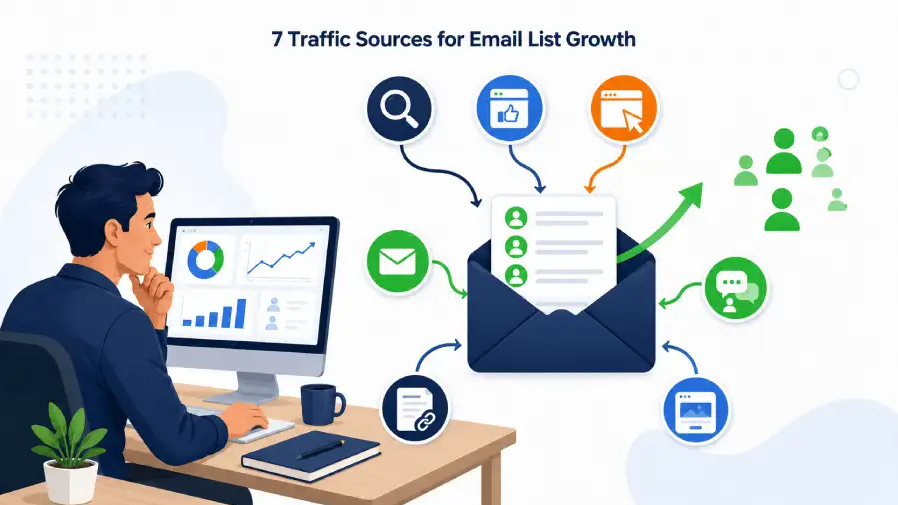
An email list is one of the most valuable assets an online business can build. Unlike social-media followers, email subscribers give you a direct way to share useful content, promote relevant offers, and build a relationship over time.
But there is one challenge: people do not join an email list by accident. They need a good reason to visit your landing page and a clear reason to subscribe.
For beginners, the best approach is not to try every marketing channel at once. Choose one or two traffic sources, test a simple lead magnet, track the results, and improve gradually.
Here are seven traffic sources worth testing for email-list growth.
Before You Start: Create a Reason to Subscribe
Traffic is only useful when visitors see value in joining your list. Before promoting anything, prepare a simple lead magnet.
A lead magnet can be:
- A checklist
- A short email course
- A free template
- A beginner guide
- A discount code
- A webinar registration
- A product comparison sheet
For example, an affiliate marketer could offer a “Beginner’s Affiliate Funnel Checklist.” An e-commerce store could offer 10% off a first order. A consultant could offer a free guide that solves a common problem for their target audience.
Your landing page should clearly answer three questions:
- What will the visitor receive?
- Why is it useful?
- What should they do next?
Keep the page focused on one action: subscribing.
1. Search Engine Optimization (SEO)
SEO is the process of creating useful content that can appear in search results when people look for answers. It is one of the strongest long-term ways to build an audience because visitors arrive with an existing question or need.
A beginner can start by writing articles that solve specific problems. For example:
- How to start an affiliate marketing email list
- Free tools for creating a lead magnet
- How to write a welcome email sequence
- Email marketing mistakes beginners should avoid
Within the article, offer a related downloadable resource. Someone reading an article about welcome emails may be interested in downloading a welcome-email template.
Best for
- Long-term audience growth
- Educational businesses
- Affiliates, creators, consultants, and software brands
- Building trust before selling
Keep in mind
SEO usually takes time. It is not the quickest channel for immediate leads, but the content can keep generating visitors long after publication.
For more articles on business growth and practical strategy, explore Topicentro’s Business category.
2. Social Media Content
Organic social media is a useful starting point when you have more time than the advertising budget. Share short, helpful posts that solve one small problem and point people toward a deeper resource.
For example, you could share:
- Three mistakes that reduce landing-page conversions
- A quick email-subject-line tip
- A short video explaining a lead magnet
- A carousel with beginner marketing steps
- A behind-the-scenes look at building a campaign
The goal is not to post random updates every day. Each post should connect to a specific audience problem and offer a logical next step.
A social-media post about “How to choose an affiliate offer” could link to a free checklist. The checklist collects the email address, and the email sequence continues the conversation.
Best for
- Personal brands
- Coaches and creators
- Visual products
- Community building
- Testing content ideas quickly
Keep in mind
Organic reach can change quickly. Avoid relying on a single platform. Use social media to bring people to an email list you own.
3. Paid Social Ads
Paid ads on social platforms can help marketers reach new audiences faster. They are often useful for testing a lead magnet, webinar, discount offer, or new product idea.
A simple campaign might promote one useful free resource to one clear audience. For instance, a beginner-focused digital-product brand could advertise a free checklist to people interested in affiliate marketing or online business.
Start small and watch the numbers:
- How many people clicked?
- How many subscribed?
- What was the cost per lead?
- Did subscribers open the first email?
- Did they engage with later messages?
Do not judge a campaign by clicks alone. A low-cost click has little value if it does not create a relevant subscriber.
4. Solo Ads and Email-Based Traffic
Solo ads are email-based promotions where a seller sends an offer to a relevant portion of their email audience. The recipient clicks through to a landing page, usually to access a lead magnet, webinar, free training, or email course.
For affiliate marketers and digital-product sellers, this can be a focused way to test an opt-in funnel. The key is relevance: the audience, offer, and landing page should make sense together.
For a more detailed look at campaign preparation, tracking, and targeted traffic, explore solo ads for affiliate marketing.
Before using email-based traffic, make sure you have:
- A clear opt-in page
- A lead magnet that fits the audience
- Click and conversion tracking
- A welcome-email sequence
- A realistic testing budget
Best for
- Affiliate marketers
- Webinar hosts
- Course creators
- Newsletter builders
- Digital products and online offers
Keep in mind
No traffic source guarantees sales. Good results depend on audience fit, landing-page clarity, follow-up emails, and honest campaign tracking.
5. Online Communities and Forums
Online communities can bring highly relevant visitors when you contribute real value. Facebook Groups, Reddit communities, niche forums, LinkedIn groups, and creator communities all have potential—if you follow their rules.
The wrong way is to join a group and immediately drop a link. The better approach is to answer questions, share practical advice, and become known as a helpful contributor.
For example, if people regularly ask how to collect email subscribers, you could explain the basics of a lead magnet, landing page, and email sequence. If the group allows it, mention a free resource at the end.
Best for
- Niche audiences
- Relationship building
- Market research
- Understanding real customer questions
Keep in mind
Each community has its own rules. Avoid spam, misleading claims, and irrelevant promotion. Helpful participation creates more trust than a promotional link ever will.
6. Partnerships and Guest Content
Partnerships allow you to reach an audience that another creator, blogger, or business has already built. This could include guest posts, newsletter swaps, podcast appearances, expert interviews, or co-hosted webinars.
A guest post works best when it teaches something useful and includes one natural resource link. For example, an article about traffic sources can link to a deeper guide on email-based traffic. Readers get extra help, while the publisher receives useful content for their audience.
When choosing a partner, focus on relevance rather than only audience size. A smaller website with readers who care about marketing may bring more useful subscribers than a very large site with a completely unrelated audience.
Best for
- Building credibility
- Reaching a relevant audience
- Brand discovery
- Long-term referral traffic
Keep in mind
A partnership should be useful for both sides. Make the content educational, original, and honest about any relationship with a promoted brand.
7. Your Existing Customers and Website Visitors
Many businesses overlook the people who already know them. Existing customers, website visitors, and social followers may be the easiest audience to invite onto an email list.
You can add email sign-up opportunities to:
- Blog posts
- Product pages
- Checkout pages
- Website pop-ups
- Contact forms
- Thank-you pages
- Social-media profile links
Do not make every sign-up form feel like an interruption. Offer something specific and useful. A product store may offer early access to new collections. A service business may offer a free consultation guide. A creator may offer a practical resource related to their content.
This approach is especially useful because people who already know your brand may be more likely to trust your next step.
How to Decide Which Traffic Source to Test First
Use this simple guide:
| If your main goal is… | Start by testing… |
| Long-term free traffic | SEO content |
| Building an audience with limited budget | Organic social media and communities |
| Fast lead-magnet testing | Paid social ads |
| Affiliate or digital-product list building | Solo ads and email-based traffic |
| Reaching a trusted niche audience | Guest posts and partnerships |
| Getting more value from current visitors | Website email capture |
The best channel is the one that matches your business goal and your audience—not the one that promises the most clicks.
Track the Right Metrics
As your email list starts to grow, monitor more than subscriber count. Look at:
- Landing-page conversion rate
- Cost per lead
- Email open rate
- Email click-through rate
- Unsubscribe rate
- Sales or booked calls from subscribers
Use UTM tags to identify the source of visitors and compare campaigns accurately. Google explains how campaign URL parameters can help identify traffic source, medium, and campaign performance.
Avoid placing personal information, such as names or email addresses, inside tracking parameters. So, you may buy solo ads traffic.
Final Thoughts
Email-list building does not require a huge marketing budget. It requires a useful offer, a simple landing page, reliable tracking, and the patience to learn what your audience responds to.
Start with one traffic source. Test a clear lead magnet. Follow up with useful emails. Then improve based on real results.
Over time, an email list can become more than a collection of addresses. It can become a trusted audience that supports your business long after a social post disappears or an ad campaign ends.
Frequently Asked Questions
What is the best traffic source for building an email list?
The best traffic source depends on your audience and offer. SEO supports long-term growth, social ads help test audiences quickly, paid search reaches people actively looking for a solution, and solo ads can be useful for opt-ins around digital products, webinars, and affiliate funnels.
Are solo ads good for growing an email list?
Solo ads can help grow an email list when the audience is relevant to your offer and your landing page has a clear reason to subscribe. Track clicks, opt-ins, email engagement, and sales to evaluate traffic quality.
Should I use SEO or paid ads to grow my email list?
SEO is better for long-term organic traffic, while paid ads are useful for faster testing and immediate reach. A practical approach is to use paid traffic to test an offer first, then build SEO content around topics that prove valuable to your audience.
What should I track in an email-list growth campaign?
Track traffic source, clicks, landing-page conversion rate, cost per lead, email open rate, click rate, sales, refunds, and unsubscribe rate. Use UTM parameters to identify which campaign produces the best-quality subscribers.



Post Comment